Although I knew about Maria Sybilla Merian and appreciated her work during my years at the Art Academy, it was not until the turn of the century that I began to research her and her work more seriously. In fact it started in 2004, when I was fortunate to obtain permission to borrow a complete facsimile of Merian’s Surinam book from the city library of Tilburg. It was the first time I saw her magnum opus in its totality, and it made an overwhelming impression on me. I drew rough copies of a few pages in my sketchbook, and so rekindled my lifelong interest in insects (Fig. 1). It did not take long before I started to make my first tentative appointments with museums and libraries to see those beautiful tomes of scientific drawings made from the sixteenth century onwards.
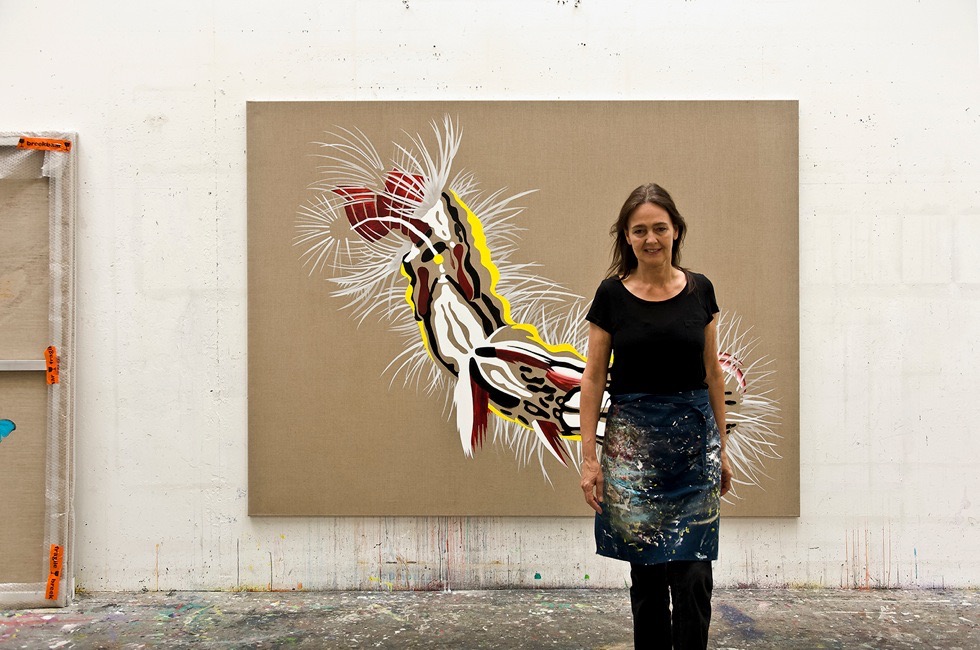
Merian entered my studio on tiptoe, as it were. The row of entomological reference works, books on Merian and facsimiles of well-known nature books expanded to claim more and more shelf space. But, not satisfied with just that, I went to Surinam to see with my own eyes what Merian must have witnessed three centuries earlier. I did some research there, collected and sketched a lot, and I visited those spots in the Surinam forest where once the plantations stood, the places where she had done her research. Real expeditions they worked out to be, complete with a machete-wielding guide to reconquer a narrow path through the jungle for me and my companions.
But this trip, although I hate to confess it, didn’t bring me that much closer to Merian. For that to happen I had to wait two more years when a distant relative in Germany sent me an article that was published in the newspaper Frankfurter Allgemeine. It was an interview, in which Fritz Geller-Grimm, the curator of the Natural History Department in Museum Wiesbaden, described a spectacular part of its entomological collection. It dated back to the seventeenth century. This so-called Gerning Collection, he revealed, included Surinam butterflies which might have been collected by Maria Sibylla Merian herself!
So I plucked up courage and I phoned Herr Geller-Grimm. We made an appointment. He proved to be an energetic, enthusiastic man who was proud of his collection and open to new ideas. He lost no time in accompanying me to the basement of the museum. Suddenly I found myself face to face with the Gerning Collection, that venerable collection of insects about which I had read. A wall of room-high cabinets glared sternly down at me. I was told that they contained a good 40,000 insect specimens. The thought that some centuries-old Surinamese butterflies might be in that collection spurred me on, and it was not long before I had a number of intriguing boxes in front of me. Each box had a glass top and bottom, and sides stuck with ultramarine blue paper. Tattered butterfly wings ogled me through the glass tops. I had arrived at a place which was to become my stamping-ground for quite some time to come.
Assisted by the staff of the museum, I gradually worked my way through the collection. In an atmosphere of eagerness tempered by caution, I worked for days at a time under the fluorescent basement lighting days mainly made up of making an inventory of what I saw. I filled memory cards full of photos, sketchbooks full of drawings and exercise-books full of notes. To take a break from this concentrated work I spent some time examining the black and white plates of the Metamorphosis Insectorum Surinamensum in the museum library.
It was, I think, during my third visit that I was struck by a tantalizing idea. The collection of butterflies was there, and so was Merian’s book; why shouldn’t I bring the two together? It might be possible to decide whether some of the specimens in the collection had actually been used for the engravings. It was a simple idea, but apparently no one had thought of it before.
This idea had occurred to me because of something I had just read in a letter Merian had written to a Doctor Volckamer in 1702; in this letter she mentioned that she was drawing her insects life-size, and if so some of the butterflies in the Gerning Collection ought to match exactly to the butterfly illustrations in Metamorphosis. A careful optical comparison should be enough to start with. It quickly became clear when comparing the butterfly wing shapes and patterns that there were indeed some astonishing correspondences, and my enthusiasm was so great that I decided to commit myself to it as a project.
As it turned out, this was truly an undertaking that had been waiting for me to discover all along. Carefully comparing dried insects with their drawn counterparts is simply not enough to draw conclusions. One must be able to follow the ‘translation’ from reality into a drawing, a painting or an engraving. A drawing from nature is inevitably partly subjective in its interpretation of the real object. I often noticed, for instance, that a drawing of an insect from life proves to be just a little larger when measured than its three-dimensional counterpart. It is simply a fact of perception that a solid object appears larger to the eye than a pattern of black lines on white paper. Another source of subjectivity is when Merian’s coloured-in drawings were reinterpreted by an engraver, for Merian engraved only two or three of the plates from Metamorphosis herself. This again is a ‘translating’ process and it certainly helps you to understand the difficulties and the impossibilities of it when you have made etchings and engravings yourself.
While fully engaged in the Wiesbaden project, I also had to visit the many contacts I had built up in the entomological world, in order to consult them about Merian’s illustrated insects, some of which have not yet been identified with any certainty. I also wanted to learn about other historic butterfly collections, if only for the sake of comparison. For years I have been travelling to museums and libraries in Amsterdam, Leiden, Haarlem, London, Berlin, Frankfurt and elsewhere, in order to research insect collections and to consult relevant old books.
In the Naturalis Biodiversity Centre in Leiden, for example, I had the opportunity to study the eighteenth-century Cramer Collection which also includes a remarkable section of antique butterfly specimens from Surinam. In the Natural History Museum in London they showed me samples of the respectable Sloane and Petiver Collections from the museum’s vaults. With my growing expertise I was even able to discover a possible link between that collection and Merian. For some years I was able to profit from the extensive collections and knowledge within the Netherlands Entomological Society in Amsterdam. It was by these means that I trained my eye and my memory, while at the same time my notebooks began to bulge with the information I was gathering for my project.
Another result was that my own collection of butterflies and moths was growing. The number of butterflies, especially specimens from Surinam, continued to expand considerably. Rather than being occupied solely with dead creatures, I started breeding caterpillars myself. This involved a daily expedition to obtain fresh leaves for my gluttonous, hairy little guests, a specific leaf for each species. I sat up many a night so as not to miss that magic moment when a butterfly emerges from its chrysalis and I started filming these fascinating events.
I am filming still! In fact, the years this research took me have had an enormous impact on my work as an artist. It brought me so many new ways of looking at my subject-matter that my painting had to take a back seat.
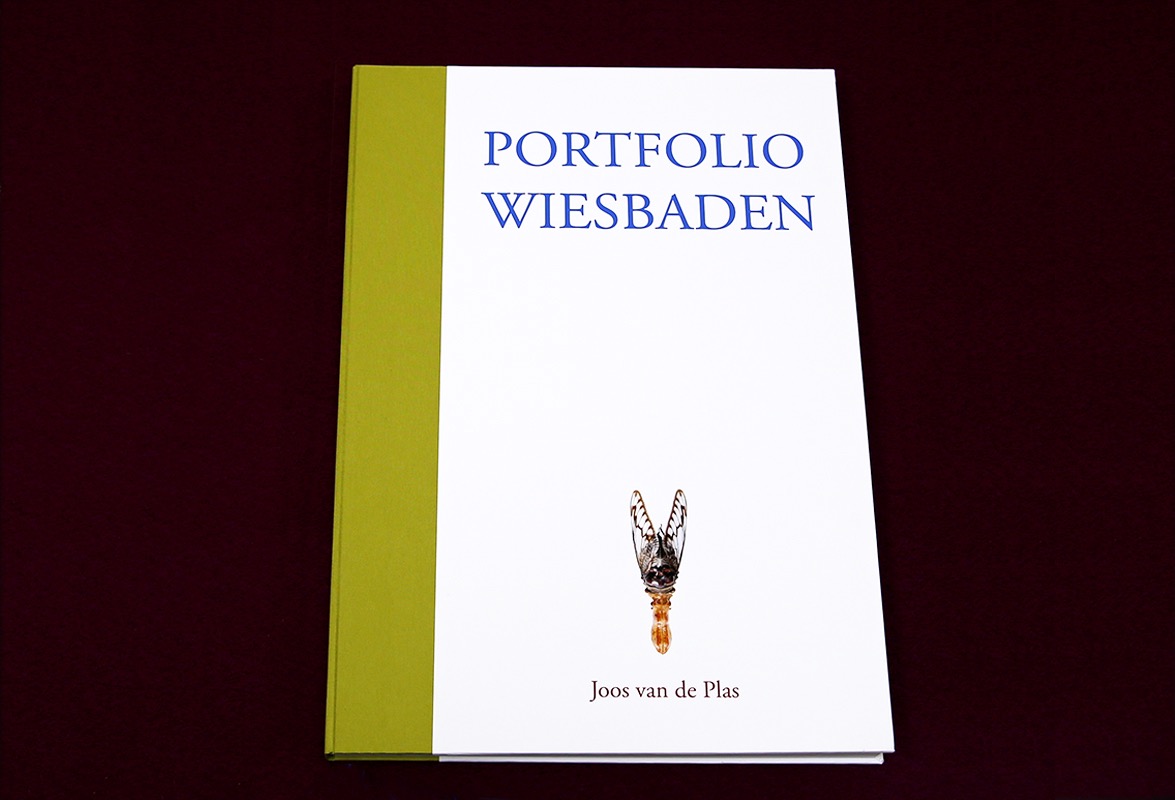
Instead of painting I started working on an ambitious artist’s book about my project. It would take me five years. I named it Portfolio Wiesbaden, and it had grown into a bulky book when it saw the light of day (Fig. 2). It is loosely based on Merian’s Suriname book and it consists of two parts. In Part One I present all the insects from Metamorphosis Insectorum Surinamensium for which I found a close match in the Gerning Collection.
The second part of the book gave me the freedom to give it a more relaxed, painting-like character. Here I show those butterfly specimens which do not correspond closely to the drawings in Metamorphosis (Fig. 3).
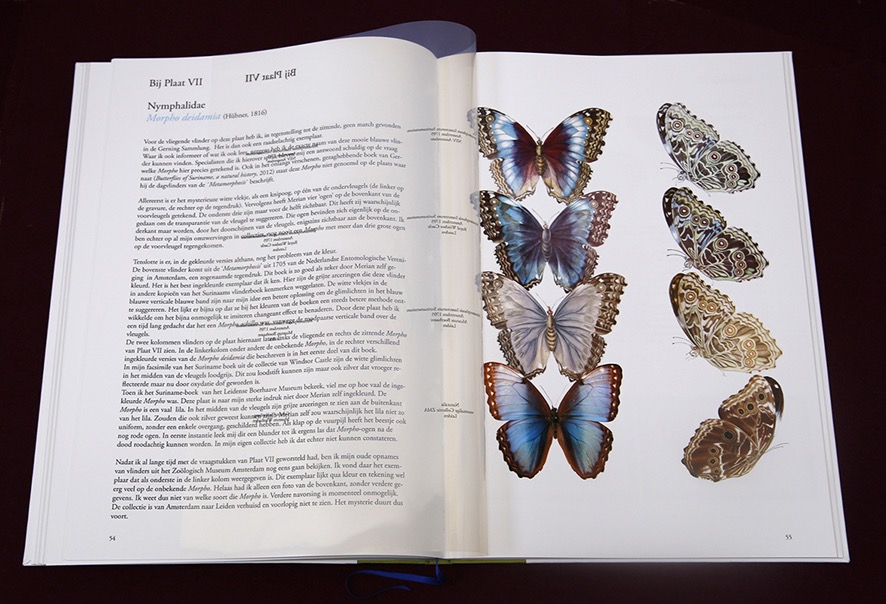
When I see my book now I am glad to find that it amounts to anything but dry, academic science. It has become a series of intriguing, colourful adventures that shows the results of my research first and foremost through the reader’s aesthetic sensibilities.
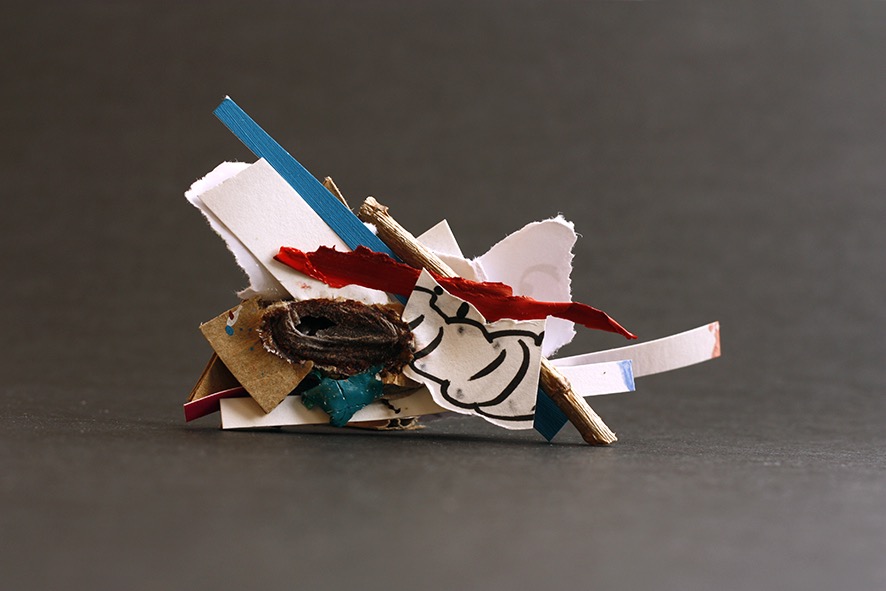
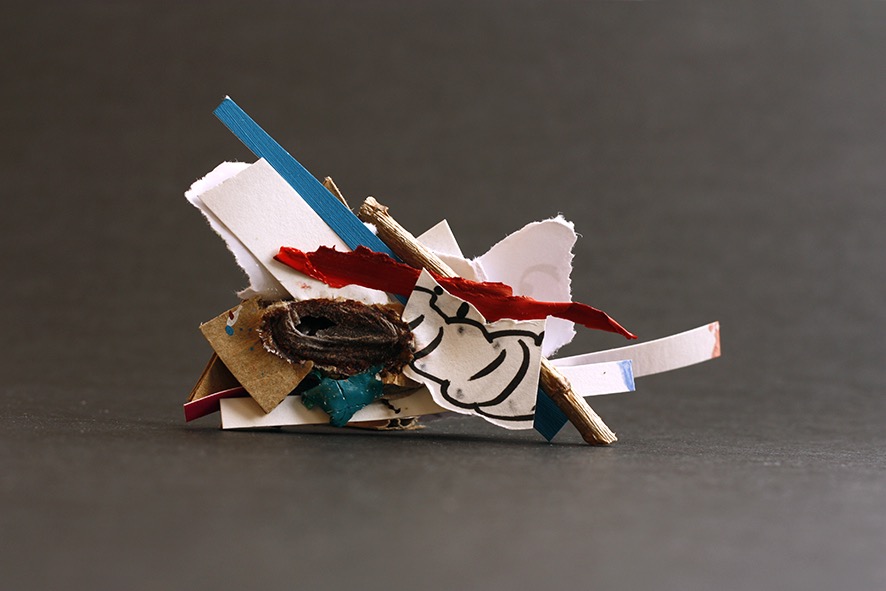
In the years that I was putting the book together, I had some cages with caterpillars that were ready to start making their cocoons, among them some of a family that make their temporary homes by cementing particles of wood and other plant-matter together. Seeing that happen I got the idea of giving them small pieces of coloured paper, snippets of drawings and other studio debris. And really, they started constructing small villa’s from the stuff, they had a crack at all sorts of styles, from Neue Sachlichkeit to Deconstructivist. My hungry guests had become my co-workers! (Fig. 4)
So, to conclude, I am happy to tell you that my research into the Gerning Collection has given me a lot of new impulses. Following them I keep finding unexpected viewpoints. And that is exactly what an artist lives for.